The first English lesson after any vacation is crucial. Students need to reconnect with the language, rebuild classroom community, and share their holiday experiences. This lesson is designed to ease students back into English while capitalising on their excitement about winter break, New Year celebrations, and family time. It can be adapted for other holiday periods, however, I generally use it after winter, as we have more free time outside of the scope of the textbook around this time of year.
Lesson Overview
Grade Level: 2nd-6th th Grade Elementary (can be expanded or higher age groups and levels)
Duration: Split over two 40-minute lessons at my school.
Language Focus: Past tense (simple introduction), vacation vocabulary, sharing experiences
Cultural Bridge: Japanese New Year traditions + winter activities
Emotional Goal: Reconnecting with classmates and rebuilding English confidence
Learning Objectives
By the end of this lesson, students will be able to:
● Use simple past tense phrases: “I went to ___” / “I ate ___” / “I saw ___”
● Recognise and use 10-12 winter vacation vocabulary words
● Share one or two vacation experiences with classmates
● Listen to peers’ experiences and respond appropriately
● Understand how to ask simple questions about vacation__
Materials Needed
● Large calendar or timeline poster (December-January)
● Vacation activity flashcards (skiing, travelling, eating osechi, visiting a shrine, etc.)
● “My Winter Vacation” worksheet template
● Drawing paper and colouring materials
● Softball or beanbag for speaking games
● Stickers or stamps for participation
● Photos/images of winter activities in Japan
● Optional: Japanese New Year items (otoshidama envelope, kagami mochi images)
________________________________________
Lesson 1
1. Warm-Up: Welcome Back Circle (5-10 minutes)
Activity: “Happy New Year” Greeting Chain
Create a standing circle. Model the interaction:
● Teacher: “Happy New Year! How are you?”
● Student: “I’m good! Happy New Year!”
● High-five or fist bump
Go around the circle quickly, building energy and comfort.
Cultural Note: Acknowledge that students likely said “あけましておめでとう” during vacation. Introduce “Happy New Year!” as the English equivalent.
Extension: Add “Did you have fun?” – Students respond with thumbs up/down or “Yes!/No!”
2. Vocabulary Introduction (10 minutes)
Target Vocabulary:
Places:
1. Grandma’s/Grandpa’s house – (gesture: old person with a cane)
2. Temple/Shrine – (hands together, prayer gesture)
3. Mountains – (triangle hand shape)
4. Ski resort – (skiing motion)
5. Hot spring (onsen) – (relaxed face, ahhh)
Activities:
6. Ate special food – (eating motion)
7. Got money (otoshidama) – (receiving envelope)
8. Played games – (game controller motion)
9. Watched TV – (rectangle shape)
10. Slept a lot – (sleeping head on hands)
Foods:
11. Osechi – (chopsticks motion)
12. Mochi – (pounding motion)
Presentation Method: Use the show-say-relate technique:
● Show flashcard
● Say the word clearly 3x
● Relate to students: “Did you go to grandma’s house? Raise your hand!”
Quick Practice Game: “I Did It!”
Hold up flashcards. Students who did that activity stand up and shout, “I did it!”
3. Sentence Pattern Introduction (10-15 minutes)
Target Patterns:
● “I went to ___”
● “I ate ___”
● “I saw ___”
● “It was fun/good/yummy!”__
Demonstration:
Teacher models with gestures and enthusiasm:
“I went to my family’s house. I ate osechi. It was yummy! I saw my grandma. It was fun!”
Visual Support:
Draw simple stick figures on the board showing: person → location → activity → happy face
Scaffolded Practice:
Level 1 (Whole Class Chorus):
● Teacher: “I went to…” (pause)
● Students: “I went to…”
● Teacher: “…grandma’s house!”
● Students: “…grandma’s house!”
Level 2 (Sentence Builders): Write sentence frames on the board:
I went to _________. I ate _________. It was _________.
Model filling in blanks with vocabulary cards.
Level 3 (Pair Practice): Students turn to partners and share using the frames. The teacher circulates with support.
4. Interactive Activity: Ball Toss Sharing Circle (10 minutes)
Setup: Students stand in a circle.
How It Works:
1. The teacher holds a soft ball and shares, “I went to Tokyo. I ate sushi!”
2. Toss the ball to a student
3. That student shares (teacher helps if needed)
4. Student tosses to another classmate
5. Continue for 8-10 students
Sentence Support Options:
● “I stayed home.” (for students who didn’t travel)
● “I played video games.”
● “I went to _’s house” (friend’s name okay!)
Encouragement Strategy:
Give stickers/stamps to everyone who shares. Celebrate effort, not perfection!
Higher-Level Extension:
Encourage students to ask follow-up: “What did you eat?” or “Was it fun?”
At this point, I often wrap up the first lesson and show the students an example of the winter vacation poster we will create in the next lesson.
________________________________________
Lesson 2
1. Creative Activity: Winter Vacation Poster
(15-20 minutes, can be shorter for some students, so have something ready for the faster ones)
“My Best Memory” Drawing & Writing
Distribute paper divided into sections.
Give students the following instructions step-by-step in English, while demonstrating at the same time to reinforce meaning and understanding.
1. “Draw your favourite memory”
2. “Colour your picture”
3. “Write one sentence” (use sentence frames from the board)
4. “Show your friend!”
Differentiation:
● Struggling students: Can copy sentences from the board or use a word bank
● Advanced students: Write 2-3 sentences or add details
● Beginners: Drawing + one-word labels acceptable
Let confident students share with the class if they would like to (5 -10 minutes)
2. Listening Activity: Teacher’s True/False Story (5 minutes)
Re-engagement Through Fun:
Tell an exaggerated story about your vacation with some false elements:
“I went to Hokkaido. I saw 100 snowmen! I ate 50 pieces of mochi! I went skiing with a bear! Was it true? Or not true?”
Students shout “True!” or “Not true!” for each statement.
This is a low-pressure activity that reinforces what we’ve done in the lesson and leaves students with the sense that the lesson was fun, even for those who struggle to express themselves in English.
3. Game: Vacation Bingo Mingle (Optional if you have time and is better for older students) (5 minutes)
Setup: Each student gets a 3×3 grid with vacation activities.
How to Play:
● Students walk around with their papers
● Ask classmates: “Did you go to the shrine?”
● If yes, that classmate signs the box
● First to get 3 in a row wins
Language Used:
● “Did you ___?”
● “Yes, I did!” / “No, I didn’t.”__
________________________________________
There is a range of follow-up activities anyone could do in the following lessons, but I usually only have enough time to limit it to 2, and I’ve found that students start to forget about the vacation period after a week or two, which limits how much enthusiasm can be squeezed out of the topic of vacations. At junior high or high school, this can be expanded greatly.
What are your favourite “back from vacation” activities? Share your ideas in the comments!
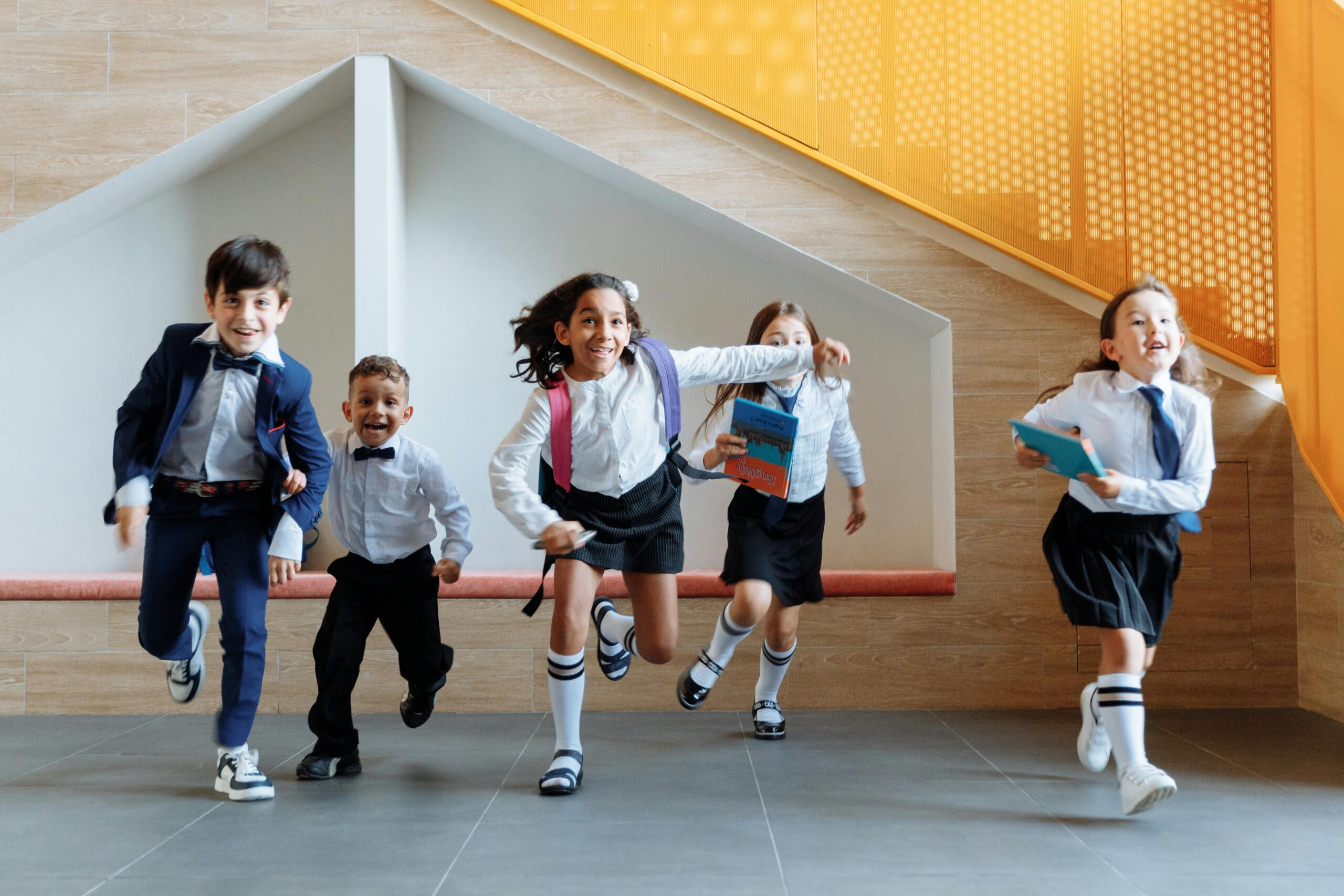
Photo by Thirdman from Pexels: https://www.pexels.com/photo/students-running-together-inside-the-school-8926648/
Leave a Reply